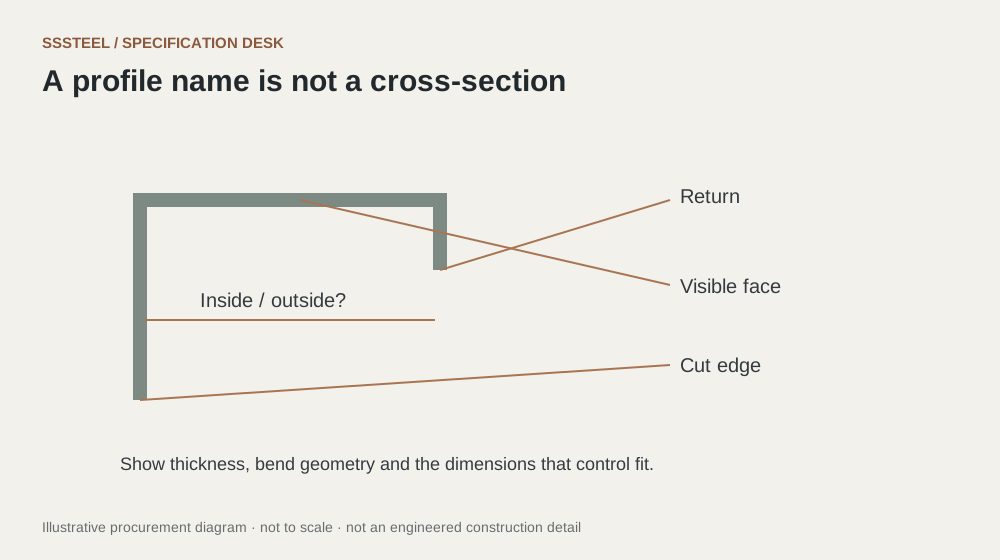
Draw the cross-section
Show all legs, returns, angles and material thickness. State whether dimensions are internal or external and identify fit-critical features. Include an adjoining material detail where the profile must receive or cover another component.
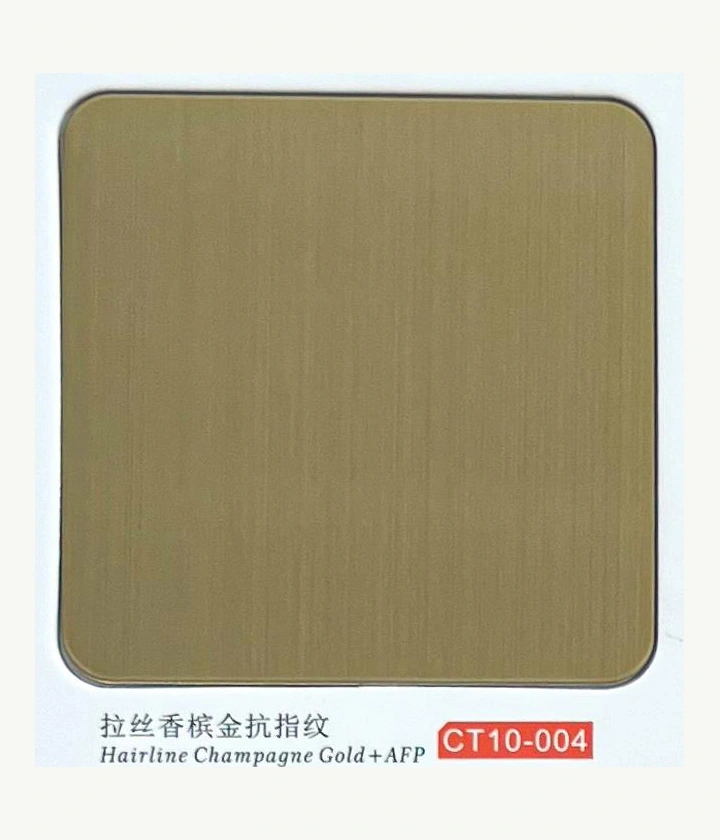
Define the visible finish
Mark the exposed faces and grain direction. Ask how bends and ends will be finished. A profile may look different from the flat sheet sample because its faces reflect light at different angles; approve a formed sample when matching is important.
Provide the length schedule
List quantities by finished length, end treatment and part mark. Identify mitres, holes and paired pieces. If stock lengths are acceptable, state who will cut and finish them on site and how that affects the required supplied condition.
| Decision | Put this in writing |
|---|---|
| Section | Show legs, angles, thickness and dimension convention. |
| Surface | Identify exposed faces and direction. |
| Schedule | List lengths, quantities and end details. |
Put the detail to work.
A profile is described as a channel but must fit over a specific board edge. Provide the internal fit requirement, material thickness and visible faces in a cross-section. Ask the fabricator to confirm the forming detail and submit a representative piece. Do not order by the trade name alone. The accepted sample should match the released section and the actual mating-material dimension.
Before you enquire
- Include mating-material dimensions.
- Distinguish stock lengths from finished parts.
- Approve a representative formed profile.
About this procurement note
The checklists and buying example are original SSSTEEL editorial guidance. Project drawings, supplier documentation and the agreed order govern the actual supply. External references are not product endorsements or proof of SSSTEEL certification.