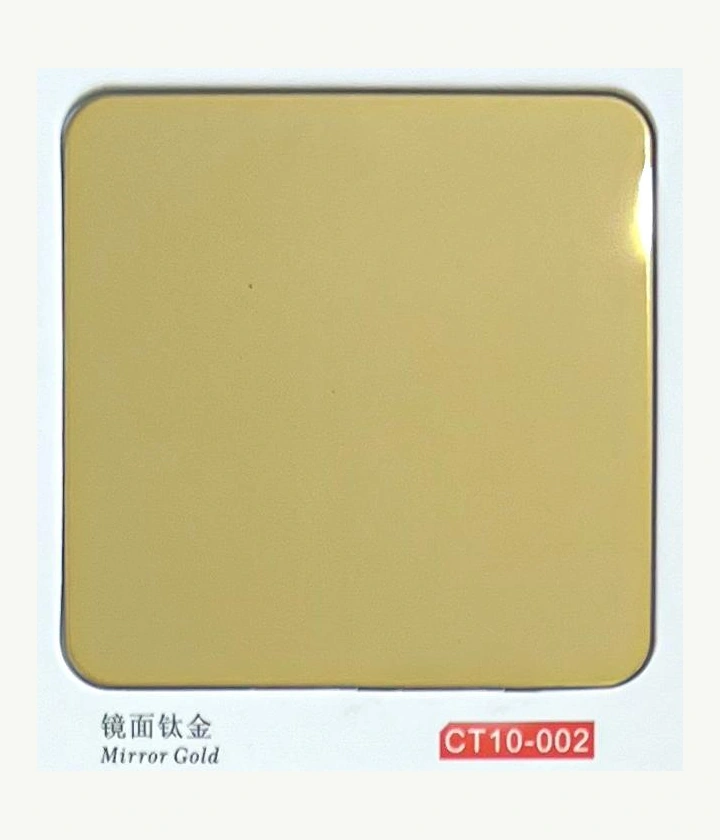
Define the supplied condition
Will the buyer receive loose sheet, a folded cassette or a bonded panel? State the support and restraint conditions for inspection. Comparing a freely resting sheet with a fixed panel can produce conclusions that do not describe the same condition.
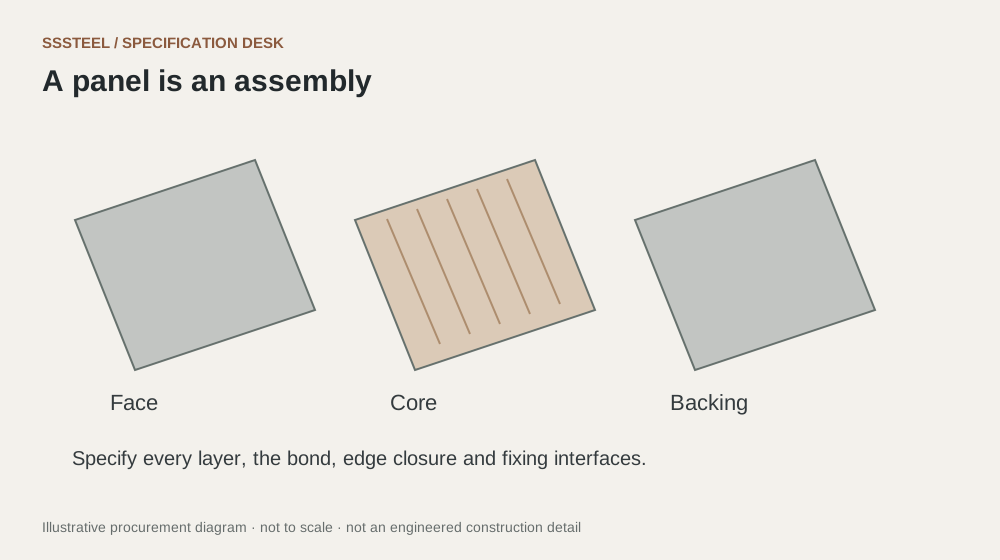
Review the complete detail
Show the proposed panel size, folds, backing and fixing arrangement to the fabricator. Ask for a representative mockup where uninterrupted reflections are a design priority. Avoid promising a visually perfect large panel based only on a small surface sample.
Record acceptance separately
Agree a dimensional method and a visual review under project-relevant lighting. Record where the observer stands and which surfaces are critical. If the appearance changes after installation, review the support and fixing conditions as well as the original material inspection.
| Decision | Put this in writing |
|---|---|
| Condition | Define loose, supported or installed state. |
| Geometry | Record size, folds and backing details. |
| Review | Separate measured flatness from reflected appearance. |
Put the detail to work.
A large panel looks acceptable on a flat support but changes appearance after fixing. Compare the installed support and restraint with the approved mockup and inspection conditions. Document both geometry and reflected appearance. The investigation should not begin by assuming either a material defect or an installation defect. A clear record of the tested condition helps the responsible parties identify which part of the system needs review.
Before you enquire
- Approve a representative panel rather than only a swatch.
- Record support conditions.
- Keep visual and dimensional reports together.
About this procurement note
The checklists and buying example are original SSSTEEL editorial guidance. Project drawings, supplier documentation and the agreed order govern the actual supply. External references are not product endorsements or proof of SSSTEEL certification.