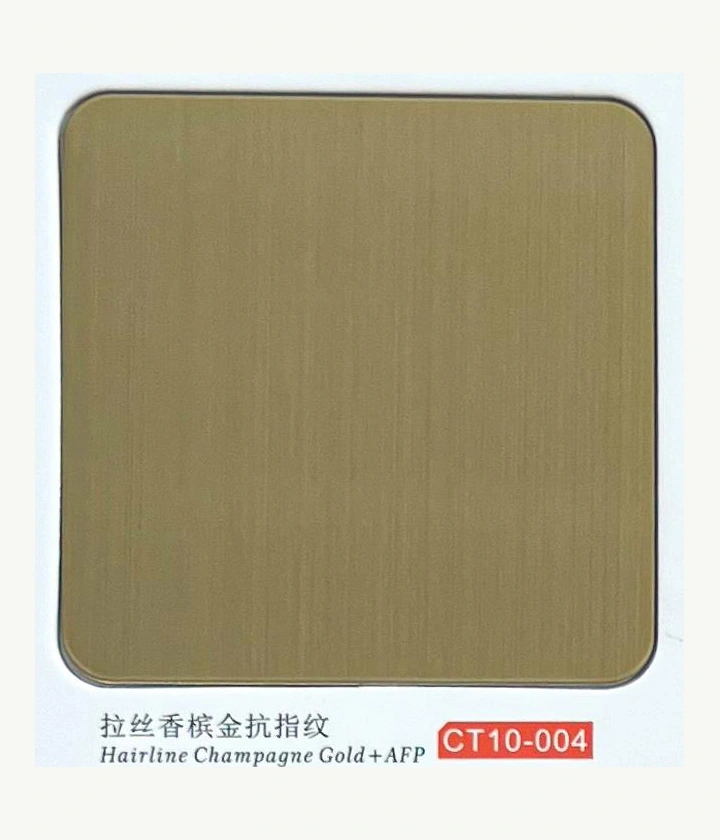
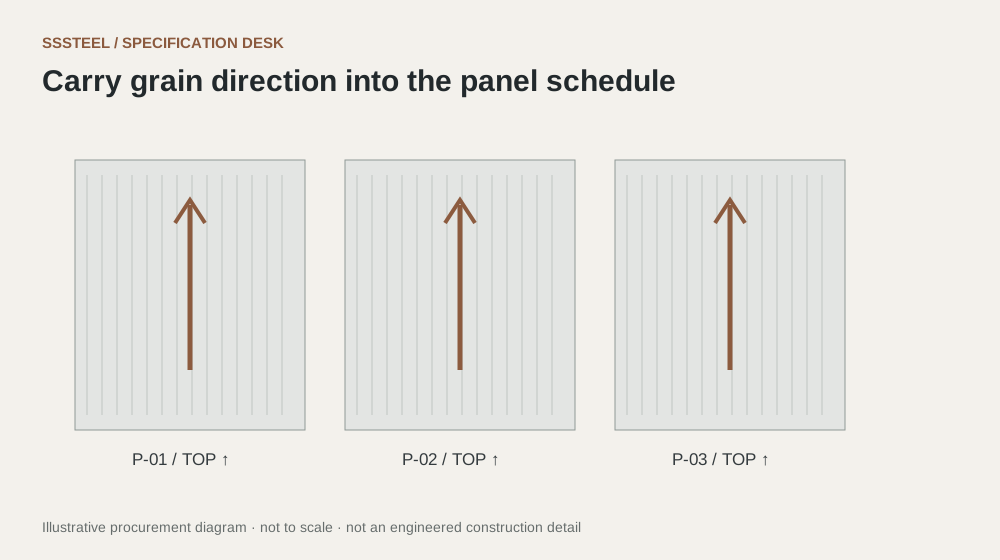
Use one orientation convention
Choose an unambiguous arrow convention and state it on the drawing legend. Identify the viewing face and top edge. A note saying vertical is insufficient if the workshop receives loose parts without the installed elevation.
Check the nested cutting proposal
A supplier may rotate rectangles to improve sheet utilisation. If rotation changes the intended appearance, mark those parts as direction-critical. Review the proposed cutting orientation before comparing prices; an efficient cutting layout is only useful if it preserves the approved visual arrangement.
Follow the mark to installation
Carry part IDs and orientation onto removable labels or protective film, using a marking method agreed with the fabricator. At unpacking, compare the label with the elevation before positioning the part. Do not use permanent site markings on an exposed decorative surface.
| Decision | Put this in writing |
|---|---|
| Elevation | Show arrows on all visible modules. |
| Cutting list | Record fixed or permissible rotation. |
| Label | Carry part mark, viewing face and top edge. |
Put the detail to work.
A cutting proposal fits more parts into each sheet when alternate rectangles are rotated. Ask whether those rectangles meet on the installed elevation. If continuous grain is required, compare a revised layout that preserves orientation. The material saving should be evaluated against the appearance requirement before price approval. Mark the accepted arrows on both the fabrication drawing and the packing identification so the decision reaches the installer.
Before you enquire
- Check corners and returns separately.
- Include orientation in inspection photographs.
- Keep the installation sequence with the packing list.
About this procurement note
The checklists and buying example are original SSSTEEL editorial guidance. Project drawings, supplier documentation and the agreed order govern the actual supply. External references are not product endorsements or proof of SSSTEEL certification.