
Identify which parts meet visually
Mark adjacent wall panels, trims and lift surrounds as matching groups. Pieces separated by a room or floor may be assessed differently from two panels sharing a joint. Give the supplier that context before quantities are split into production lots.
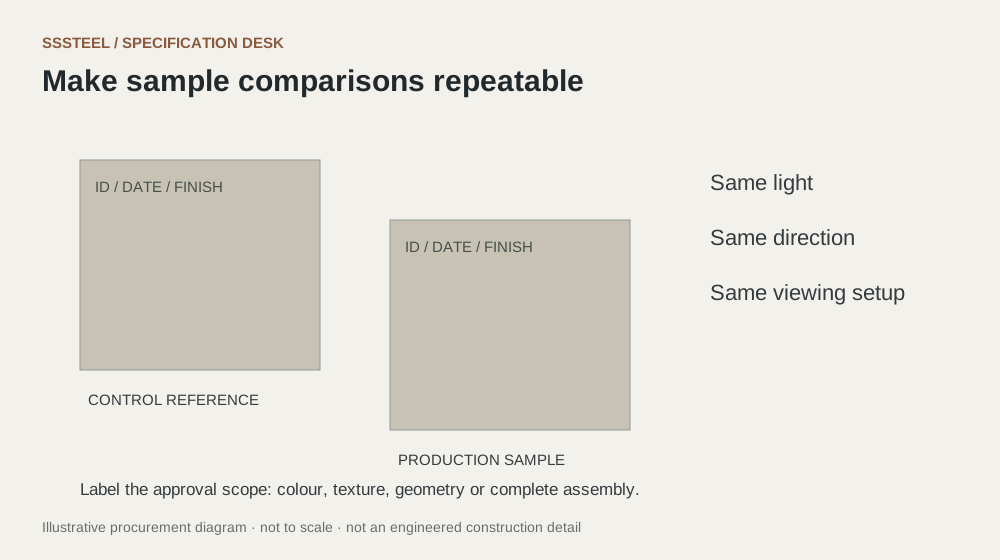
Retain a physical reference
Keep one approved sample protected and label it with the finish reference, approval date and project. Digital photographs help communication but should not become the sole colour standard. If a new batch is proposed, compare it with the retained reference under the same conditions.
Plan staged orders
Ask how later deliveries will be checked and identified. Consider whether spare pieces should be ordered with the original group, while making the quantity a project decision rather than a universal allowance. Record any accepted variation and its permitted location in writing.
| Decision | Put this in writing |
|---|---|
| Matching group | List components seen together. |
| Control sample | Record sample ID and approval conditions. |
| Later deliveries | Define comparison and approval before dispatch. |
Put the detail to work.
A lobby is purchased in two stages several months apart. Keep the first-stage control sample and identify where the second-stage panels will meet the installed work. Review the later sample before production, not only after delivery. If a visible difference is accepted in a separate area, record the approved location. That acceptance should not automatically extend to panels sharing a joint in the main lobby.
Before you enquire
- Keep reference and production samples separately labelled.
- Map batch IDs to panel marks.
- Agree a process for replacement pieces.
About this procurement note
The checklists and buying example are original SSSTEEL editorial guidance. Project drawings, supplier documentation and the agreed order govern the actual supply. External references are not product endorsements or proof of SSSTEEL certification.