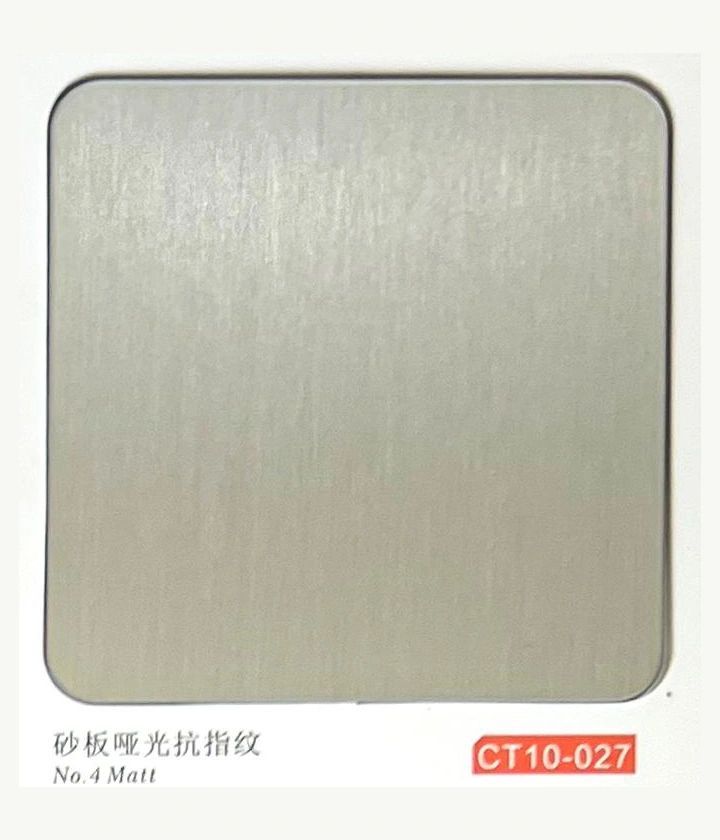
Define the visual purpose
State whether the screen provides visual separation, a decorative backdrop or partial concealment. View the pattern at the intended distance and against a representative background. Identify the required orientation and whether the design repeats across several panels.
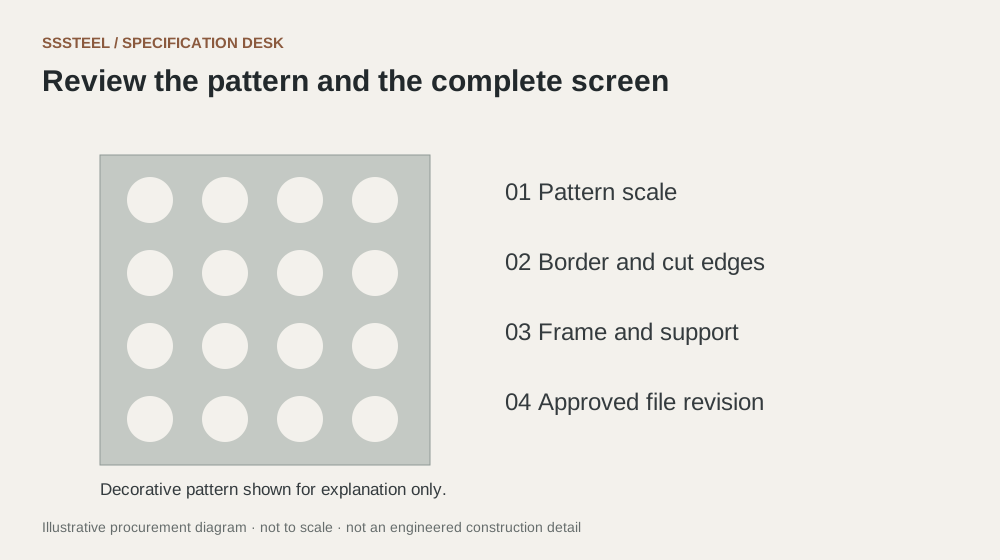
Review the geometry with the fabricator
Provide overall dimensions, borders, cutouts and the proposed material. Ask the fabricator to review small features and practical production limits. Open area alone cannot establish strength or suitability; the frame and support must be reviewed for the application.
Approve a representative sample
Use a sample that includes fine details and the edge or border. Check the cut condition and final finish. Record the approved pattern revision and scale, particularly if the design file is later resized for a different panel.
Make scale visible in the artwork
Include an overall dimension and a reference detail on the proof. If the pattern repeats, identify its origin and whether partial repeats are permitted at the borders. Show which side will face the viewer. Keep the visual proof and the production drawing connected by revision, so the workshop does not cut a technically valid file that represents the wrong design scale.
The border is part of the design
A frame, solid perimeter or mounting zone can change how a pattern reads. Show those elements in the same proof rather than reviewing the open pattern alone. Ask how small features and corners will be finished, and request a representative cut sample when detail quality matters. Do not use a generated image as evidence of the cutting process or finished edge.
What an approved sample does not prove
A small cut sample can demonstrate appearance and workmanship. It does not demonstrate the strength or anchorage of a full-height screen. Identify any barrier, wind or impact function for the responsible designer to review. Keep the decorative pattern decision separate from structural and installation approval, even when both appear on the same drawing.
| Decision | Put this in writing |
|---|---|
| Pattern | State scale, repeat and intended orientation. |
| Panel | Show dimensions and uncut borders. |
| Review | Assess fabrication and support separately. |
Put the detail to work.
A screen pattern is enlarged to suit a wider opening. Ask the fabricator to review the resized geometry, borders and fine features, and ask the responsible designer to review support requirements. The approved small pattern is not automatically approval of the enlarged panel. Retain the new scale and file revision with a representative sample so the visual and production decisions remain connected.
Before you enquire
- Review the pattern at viewing distance.
- Keep artwork and drawing revisions aligned.
- Approve edge quality on a physical sample.
About this procurement note
The checklists and buying example are original SSSTEEL editorial guidance. Project drawings, supplier documentation and the agreed order govern the actual supply. External references are not product endorsements or proof of SSSTEEL certification.