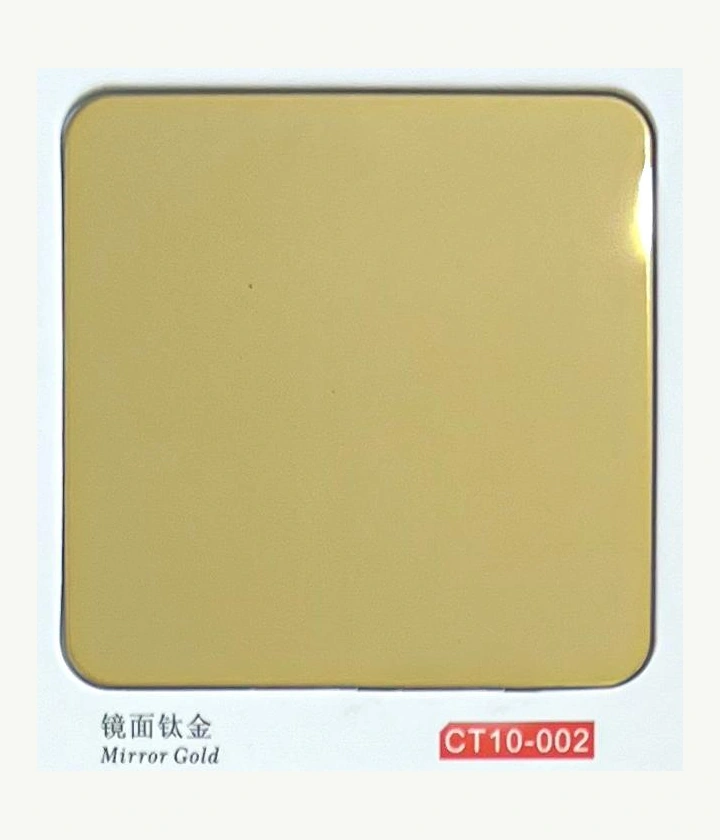
Build a comparison set
Place candidate samples beside the actual adjoining stone, timber or painted surface. Label each sample clearly. Keep mirror, brushed and patterned finishes in separate comparisons so a preference for texture is not mistaken for a preference for colour.
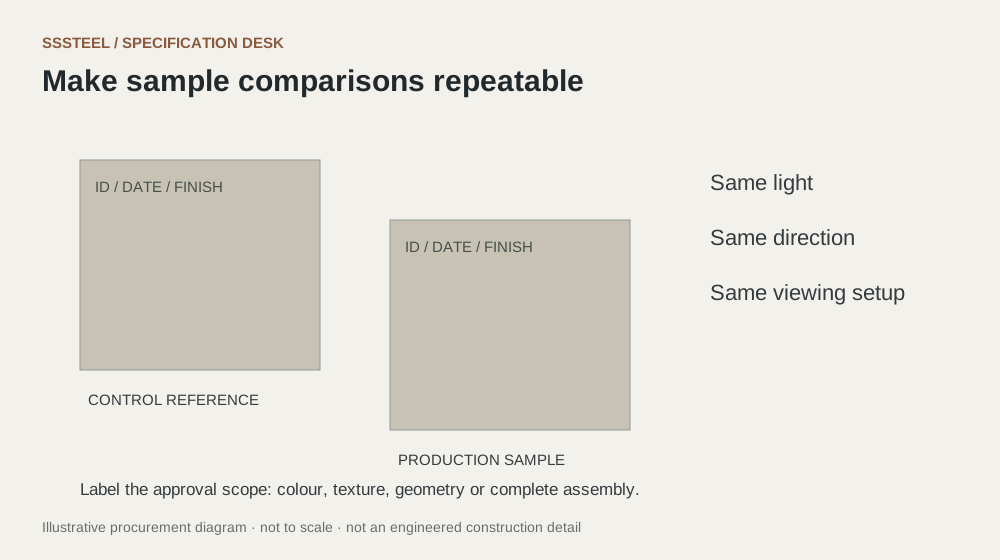
Approve under project lighting
View the samples vertically if they will become wall panels and at the relevant angle if they will become returns or ceilings. Record the light source and viewing position. Photographs are useful records, but screen settings can change their apparent shade.
Define the matching package
List all components that should share the chosen finish. Ask whether they can be supplied to the same approved reference and how differences in texture or geometry will be managed. An attractive loose swatch is the start of approval, not the end of it.
| Decision | Put this in writing |
|---|---|
| Colour | Select a labelled physical reference. |
| Texture | Identify mirror, directional or patterned surface. |
| Components | Group items that must match visibly. |
Put the detail to work.
A gold mirror panel and a gold brushed trim use similar colour descriptions but reflect their surroundings differently. Compare them in the intended assembly and decide whether contrast is acceptable. If the design calls for a closer match, request a representative formed trim beside the panel sample. Record the approved pair together; two separate approvals made under different lights may not resolve the final joint appearance.
Before you enquire
- Compare against adjoining real materials.
- Record approval conditions.
- Include returns and narrow trims in the sample review.
About this procurement note
The checklists and buying example are original SSSTEEL editorial guidance. Project drawings, supplier documentation and the agreed order govern the actual supply. External references are not product endorsements or proof of SSSTEEL certification.