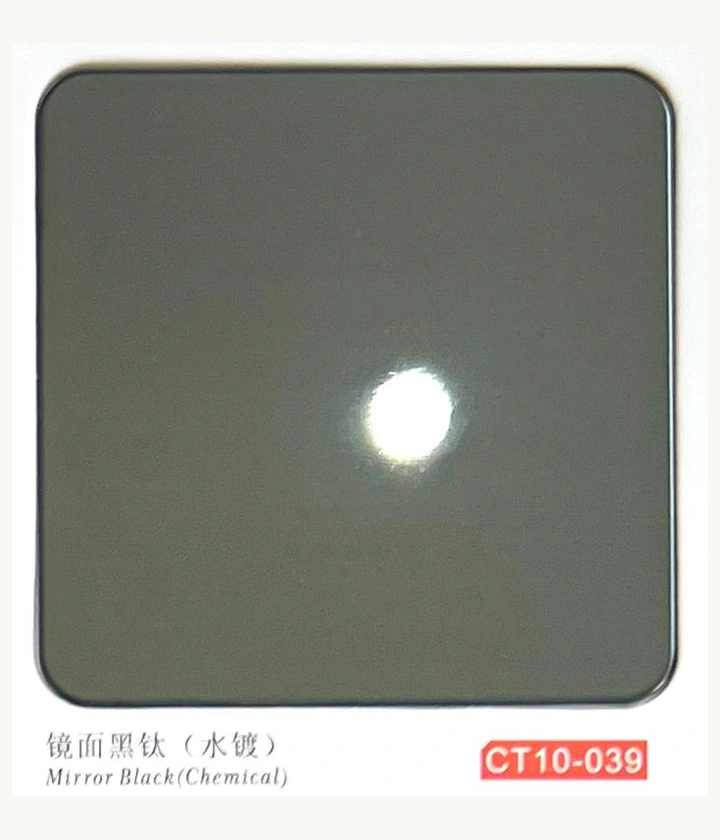
Do not infer process from a photograph
A black reflective sample does not prove a PVD process. The existing CT10-039 reference is labelled Mirror Black Chemical; it should remain identified that way. Ask for a separate confirmed reference if the project specifically requires another process.
Review light and touch
Compare the proposed surface in the installation orientation, including normal hand contact and the agreed cleaning method. Ask whether the intended appearance is reflective black, a directional dark surface or a low-reflection finish. These should not share an ambiguous acceptance label.
Inspect the details
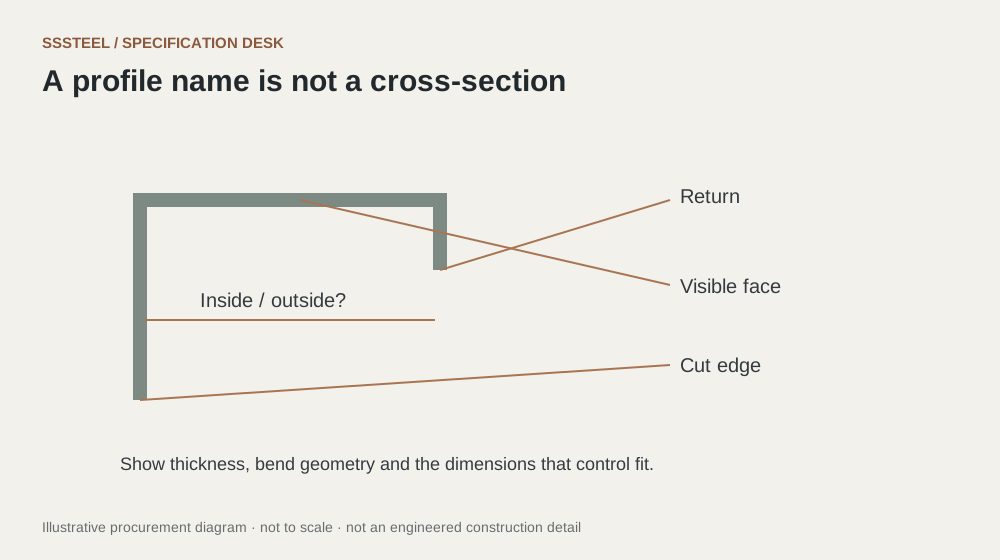
Mark cut edges, fastener recesses, folds and seams that will be visible. Request a sample detail where needed. Confirm the final supplied condition before ordering so edge finishing does not become an unplanned site operation.
| Decision | Put this in writing |
|---|---|
| Reference | Use an exact finish code and process description. |
| Appearance | Record texture and intended reflection. |
| Edges | Define which cuts and returns remain visible. |
Put the detail to work.
A drawing shows black panels with visible cutout edges around a control opening. Ask the fabricator to show the finished edge condition, not just the front surface. If the edge exposes a different appearance, the design may need a trim or another approved detail. Resolve that choice before cutting so the installer is not expected to invent a cosmetic repair around a completed opening.
Before you enquire
- Keep chemical and PVD references distinct.
- Review the actual fabricated detail.
- Obtain care guidance for the supplied surface.
About this procurement note
The checklists and buying example are original SSSTEEL editorial guidance. Project drawings, supplier documentation and the agreed order govern the actual supply. External references are not product endorsements or proof of SSSTEEL certification.