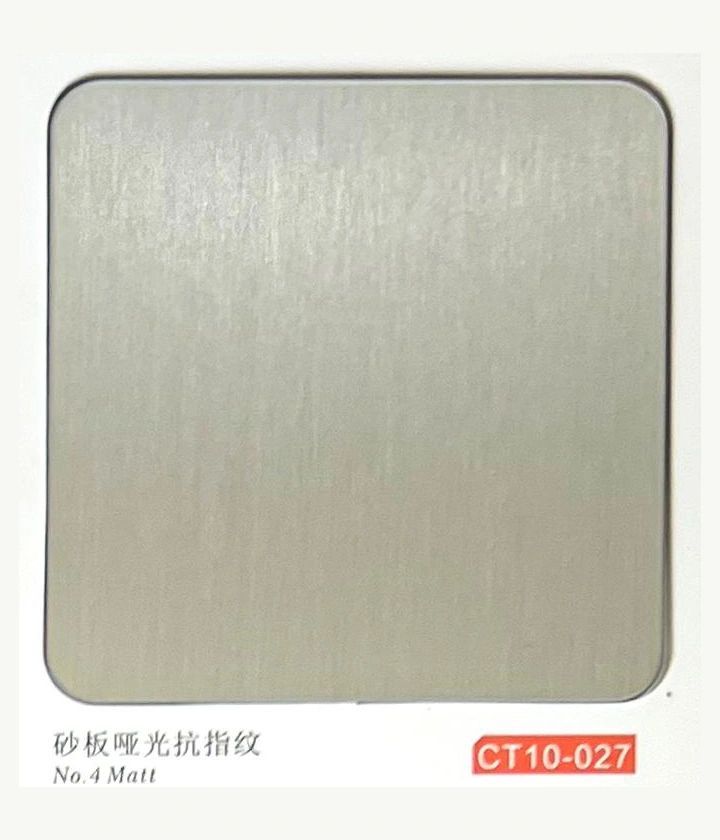
Separate defect types
List scratches, dents, stains, texture variation, colour mismatch and geometric concerns separately. A dimensional tolerance does not answer whether a scratch is acceptable. Likewise, an approved colour sample does not establish panel flatness or workmanship requirements.
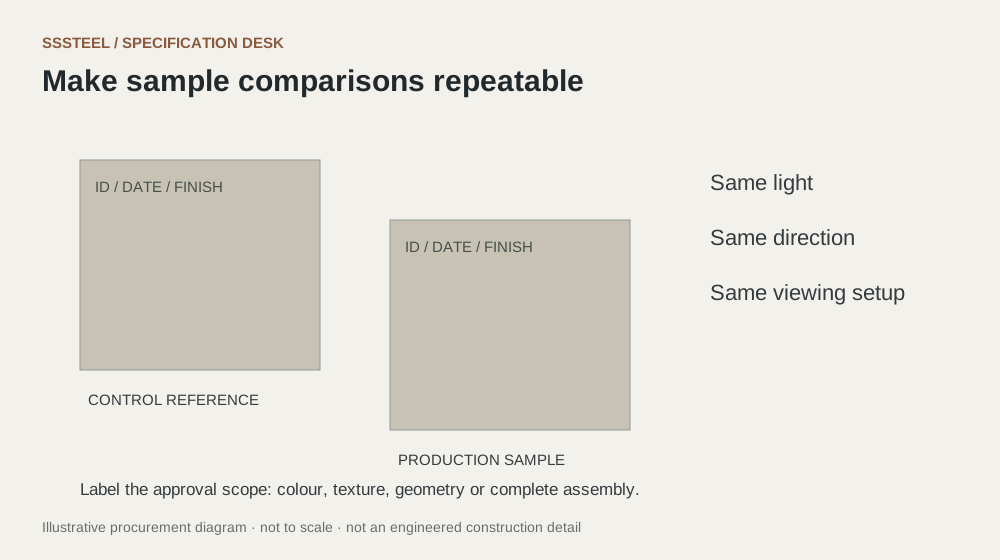
Set the viewing conditions
Agree the installed orientation, normal viewing distance, lighting and which faces are critical. Use a representative mockup where necessary. These are project choices to be agreed, not universal acceptance numbers that can be copied from another order.
Make the record actionable
For an issue, photograph the whole component with its ID, then the affected area with a scale reference. Keep the part protected while the supplier reviews the evidence. Do not attempt polishing or chemical cleaning before agreeing the remedy, because it may alter the finish being assessed.
| Decision | Put this in writing |
|---|---|
| Reference | Identify the approved sample or mockup. |
| Method | Record lighting, orientation and review location. |
| Issue report | Link photographs and measurements to the part ID. |
Put the detail to work.
An inspector reports a mark visible only under a handheld light held very close to the surface. Compare the finding with the agreed visual inspection conditions, while still documenting the mark clearly. If the contract never defined those conditions, resolve them with the buyer and supplier rather than inventing a pass or fail rule. Any accepted exception should identify the affected part and its installation location.
Before you enquire
- Agree criteria before production release.
- Keep appearance and dimension checks separate.
- Record any accepted deviation in writing.
About this procurement note
The checklists and buying example are original SSSTEEL editorial guidance. Project drawings, supplier documentation and the agreed order govern the actual supply. External references are not product endorsements or proof of SSSTEEL certification.