Provide handling information
Tell the supplier the transport route, receiving equipment and access limitations known to the buyer. Ask for package dimensions and gross weights for planning. Any lifting arrangement must be designed and used by competent parties for the actual shipment.
Protect the critical details
Identify visible faces, vulnerable corners and components that must not rub together. Agree the separation and support method with the supplier. Request photographs before the package is closed so protective arrangements can be reviewed while changes are still possible.
Make unpacking predictable
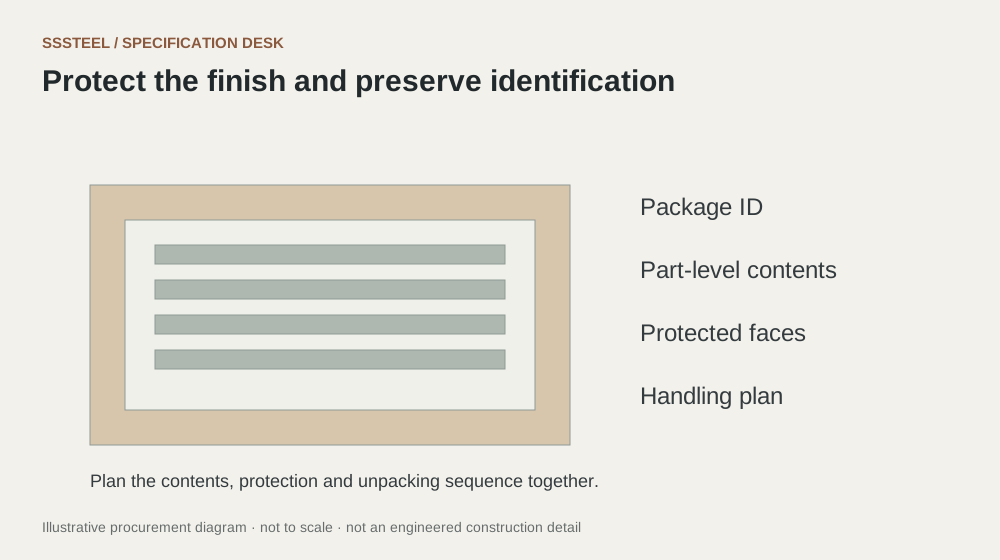
List package IDs and the parts inside each package. Group items by installation location where practical. Keep documents available without requiring every package to be opened, and confirm any destination-specific packaging requirements with the relevant logistics provider.
| Decision | Put this in writing |
|---|---|
| Transport | Provide route and receiving constraints. |
| Protection | Identify critical faces, edges and support needs. |
| Packing list | Connect package IDs to individual part marks. |
Put the detail to work.
A shipment contains several finish types needed on different floors. Ask the supplier to identify packages by installation group and provide a part-level contents list. Review how critical surfaces and corners are separated before closure. If consolidation is necessary, keep the internal order clear so receiving teams can find the needed parts without repeatedly exposing every decorative surface.
Before you enquire
- Review packing photographs before closure.
- Obtain dimensions and weights.
- Keep installation groups identifiable.
About this procurement note
The checklists and buying example are original SSSTEEL editorial guidance. Project drawings, supplier documentation and the agreed order govern the actual supply. External references are not product endorsements or proof of SSSTEEL certification.