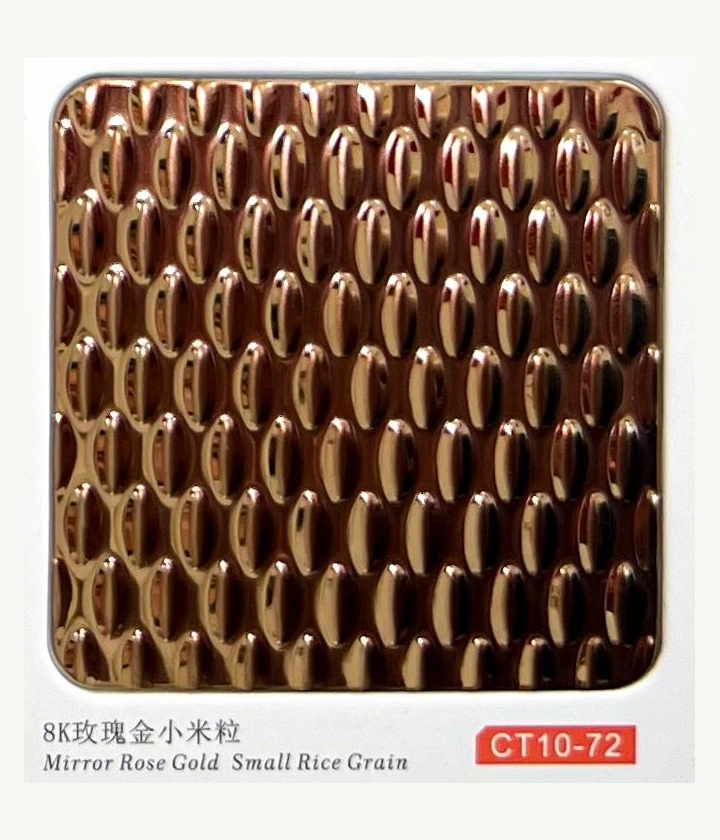
Separate appearance and specification
Record the sample code, source and finish description. Add confirmed substrate information only where it is known. Do not infer a production thickness range, coating process or availability from the presence of one sample.
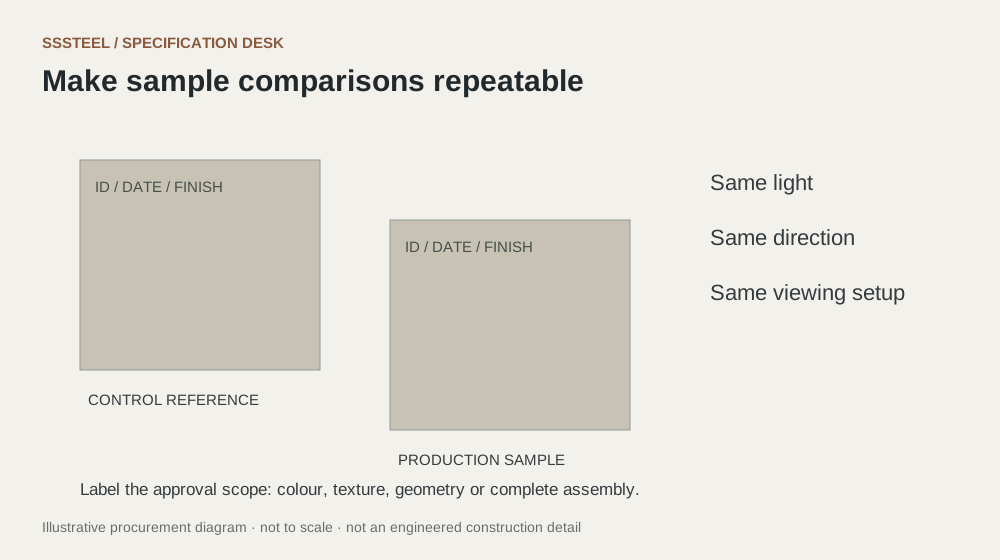
Keep approval references protected
Use display samples for everyday handling and retain controlled references for comparisons. Mark the date and scope of any customer approval. If a reference is damaged or replaced, record that change rather than silently introducing a new standard.
Connect samples to enquiries
Include the sample code and a photograph of its label in the customer brief. Ask for intended application, size, quantity and environment. This turns an appearance preference into a useful purchasing conversation while keeping supply feasibility open for review.
| Decision | Put this in writing |
|---|---|
| Catalogue record | Code, source and confirmed description. |
| Control reference | Protected sample and approval record. |
| Customer brief | Application, geometry and quantity. |
Put the detail to work.
A frequently handled display sample becomes scratched while a protected approval reference remains unchanged. Keep the worn sample for demonstrating handling only if it is labelled accordingly. Use the protected reference for acceptance comparisons. When a supplier updates the finish, issue a new reference record rather than quietly replacing the library piece under the old code.
Before you enquire
- Do not use display wear as a quality standard.
- Record unconfirmed specifications explicitly.
- Keep sample photos linked to labels.
About this procurement note
The checklists and buying example are original SSSTEEL editorial guidance. Project drawings, supplier documentation and the agreed order govern the actual supply. External references are not product endorsements or proof of SSSTEEL certification.