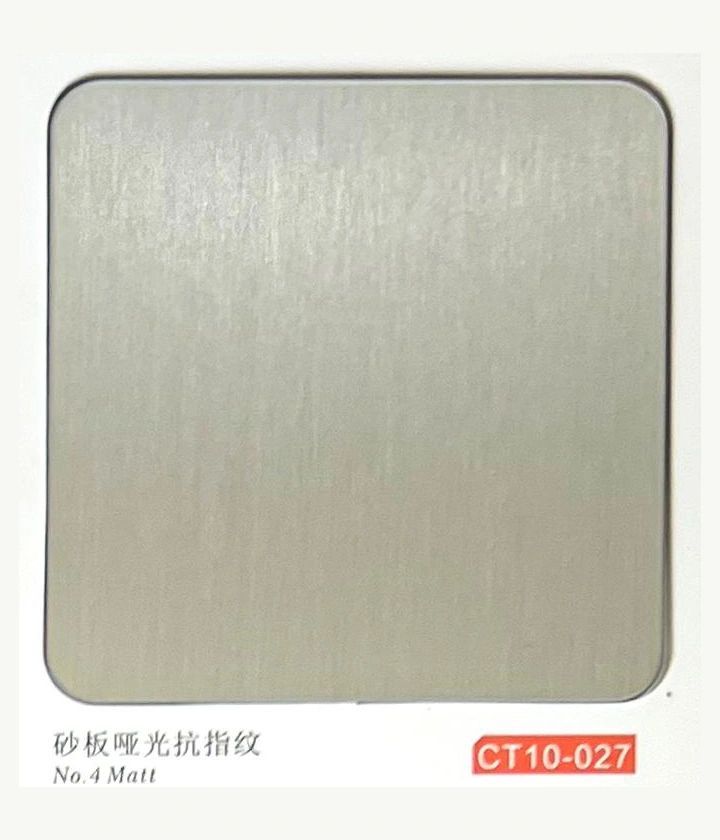
Describe the actual environment
Tell the supplier whether the component is indoors, outdoors, sheltered, near the coast or exposed to cleaning chemicals. Record whether rain can wash the surface and how it will be maintained. A country name alone is not enough to describe a building location.
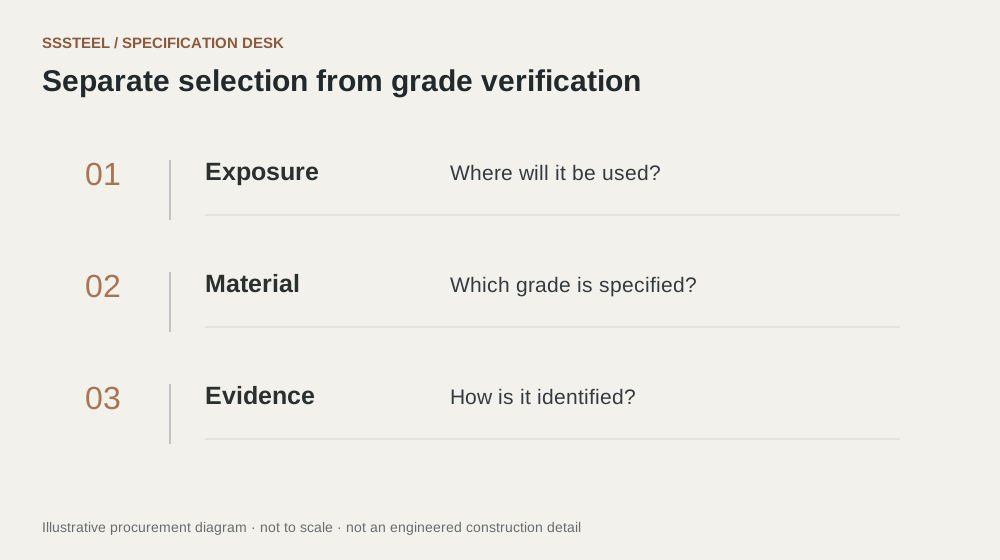
Use the comparison correctly
316 contains molybdenum and is commonly considered when greater resistance to chloride-related attack is needed than 304 offers. It is not universally corrosion-proof. Severe exposure can require a different alloy or design, so ask for a project-specific recommendation rather than accepting a blanket marine-grade claim.
Keep the selected grade traceable
Carry the grade into the quotation, material documentation and part schedule. If a substitute is proposed, review it before manufacturing. A matching finish sample does not establish that the substituted substrate meets the original requirement.
A useful selection request
Send a short exposure statement with the drawings: internal or external location, whether the component is sheltered, likely contact with salts or cleaning products, and the planned maintenance access. Include photographs if the site is already built. Ask the reviewer to state the assumptions behind the proposed alloy. This is more useful than asking which grade is best without describing the job.
Questions that should trigger another review
Return the selection for review if a dry interior becomes a wet area, if a component moves outdoors, or if the maintenance plan changes. Treat a different surface texture as a separate selection variable too. The grade discussion should not stop once a colour sample has been accepted. Preserve the exposure assumptions so a later purchasing substitution can be assessed against the original decision.
The order should close three separate decisions
The first decision is material suitability for the environment. The second is appearance, established through a finish reference. The third is fabrication and assembly, established through drawings and the proposed process. A certificate for the base alloy does not approve the colour, and a colour sample does not approve a connection. Keep all three decisions visible in the final order package.
| Decision | Put this in writing |
|---|---|
| Exposure | Describe salts, moisture, shelter and cleaning. |
| Grade | Record the proposed alloy and reason for selection. |
| Evidence | Link the supplied material to its documentation. |
Put the detail to work.
Two entrances share the same appearance specification, but one opens toward a salt-exposed waterfront and the other is enclosed. Describe those environments separately in the request for recommendation. The same decorative finish may be possible on different approved substrates, but the material decision must follow the exposure review. Keep the selected grade identified by location so the workshop does not treat both entrances as interchangeable parts.
Before you enquire
- Provide site and maintenance information.
- Approve substitutions in writing.
- Keep colour approval separate from grade approval.
Technical references & editorial scope
- Outokumpu — Atmospheric corrosion ↗
Environment, finish and geometry affect atmospheric corrosion.
The checklists and buying example are original SSSTEEL editorial guidance. Project drawings, supplier documentation and the agreed order govern the actual supply. External references are not product endorsements or proof of SSSTEEL certification.