Give every part an identity
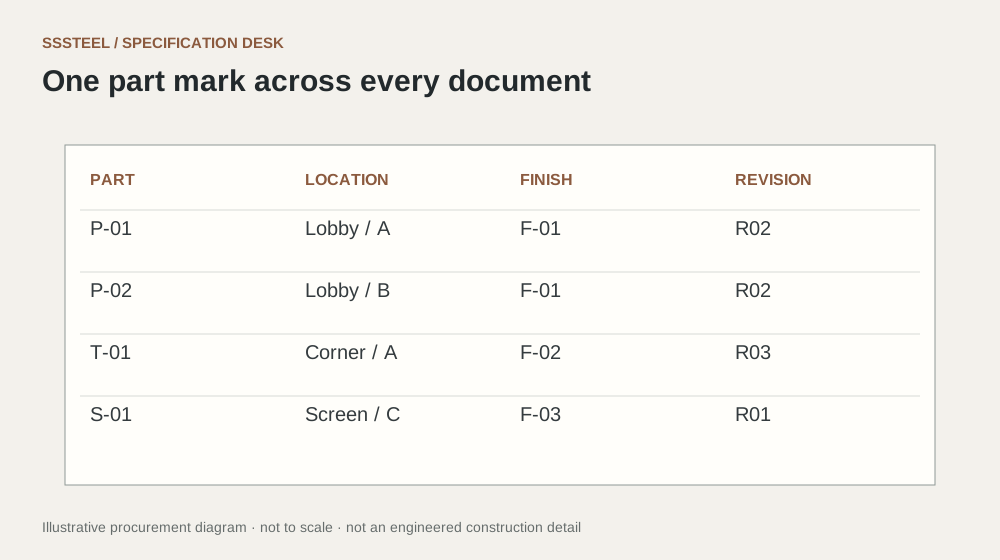
Assign a unique mark and link it to the drawing or installation location. Use consistent units. Distinguish finished dimensions from rough blanks that will be processed later, and state whether allowance is already included.
Add the surface constraints
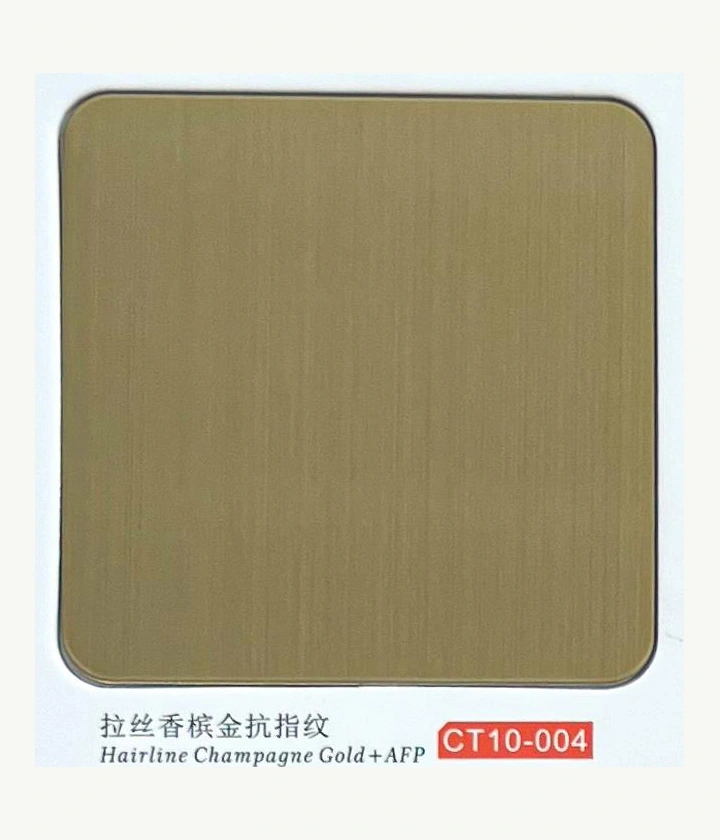
Mark the visible face, finish reference and grain orientation. If parts cannot be rotated for nesting, make that explicit. Include holes, notches and special edges in the drawing rather than expecting a rectangle-only schedule to cover additional operations.
Check totals without hiding detail
Summarise quantities and areas for purchasing, but retain the individual dimensions. Ask the supplier to explain the proposed stock-sheet and cutting basis. A net area total cannot establish how efficiently a mixed-size cutting list will fit available material.
| Decision | Put this in writing |
|---|---|
| Part mark | Connect schedule, drawing and packing label. |
| Size | State finished or blank dimensions and units. |
| Direction | Identify fixed orientation and visible face. |
Put the detail to work.
Several rectangles share the same size but are installed with different grain directions. Give them distinct part marks or explicitly separate orientation groups in the schedule. Ask the supplier to preserve the distinction through cutting and labelling. If the order is reduced to a single combined quantity, the installer may receive the correct dimensions without enough information to recreate the intended elevation.
Before you enquire
- Check duplicate part marks.
- Separate different finishes and thicknesses.
- Approve the cutting basis before release.
About this procurement note
The checklists and buying example are original SSSTEEL editorial guidance. Project drawings, supplier documentation and the agreed order govern the actual supply. External references are not product endorsements or proof of SSSTEEL certification.